
 EN
EN
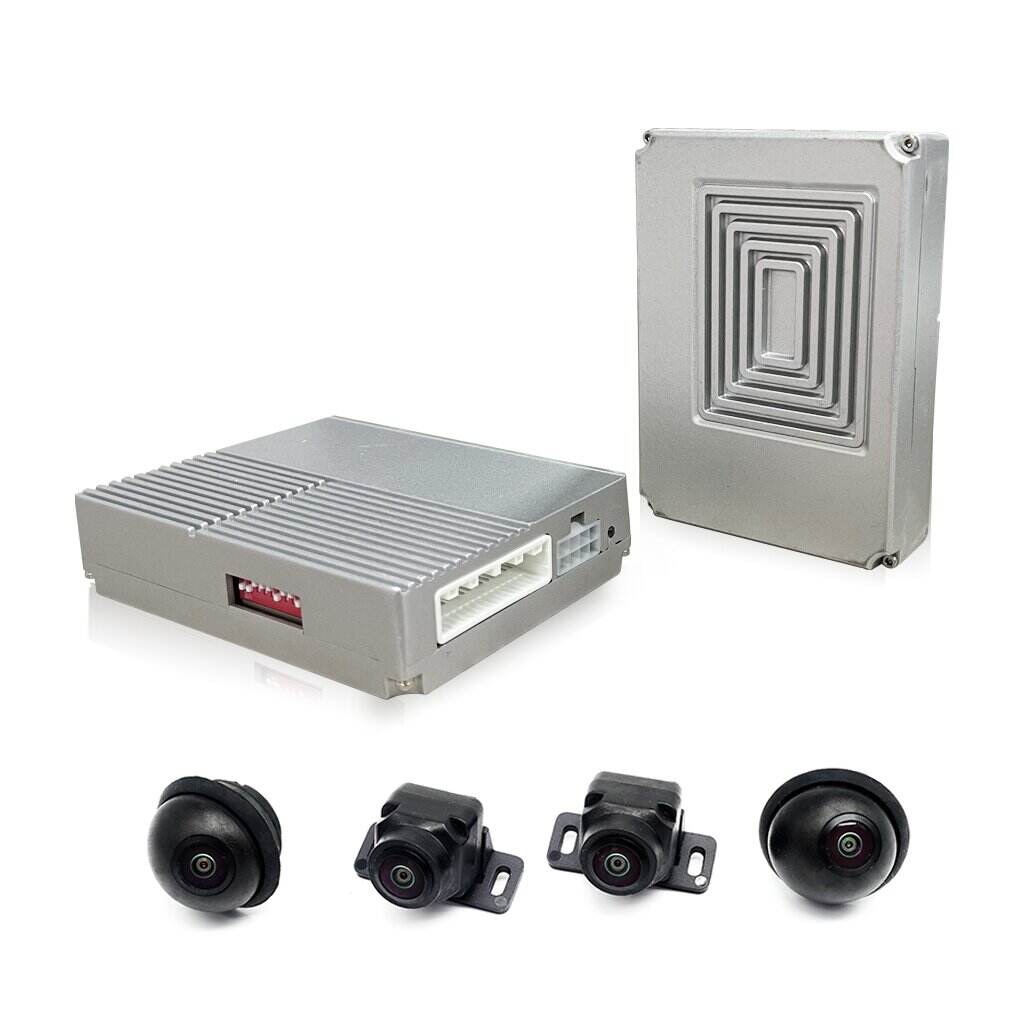
Cost Savings and ROI for Commercial Fleets Using 360 Degree View Car Systems
Reduction in low-speed collision claims and associated repair cost savings
About 40 percent of all accident costs for fleets actually come from low-speed maneuvers. Most of these happen when vehicles are backing up while docking, parking, or navigating through cities. That's where those 360-degree camera systems shine. They get rid of annoying blind spots right away and give drivers a bird's eye view so they know exactly where everything is around them. According to industry research, such systems cut down on backing accidents by over half. Think about it this way: fixing minor body damage usually runs between two thousand to five thousand dollars each time it happens. And guess what? Around seventy percent of all maintenance money goes toward fixing stuff caused by collisions. So having good visibility isn't just safety-first anymore, it actually saves money too. Fewer trips to the repair shop, fewer parts needing replacement, and significantly lower labor costs across the board.
Insurance premium discounts and lifecycle ROI analysis for commercial fleets
Telematics-enabled safety systems—including 360-degree view technology—are now recognized by major insurers as proven risk-mitigation tools, qualifying fleets for 10–25% insurance premium reductions through usage-based programs. When evaluating total lifecycle ROI, fleets benefit from both hard and soft savings:
- Hard savings: Lower premiums ($0.07/mile), plus an estimated $740,000 in annual repair-cost reduction per 100-vehicle fleet
- Soft savings: 20% less downtime (translating to higher asset utilization) and diminished liability exposure
Fleet operators consistently report payback periods of 6–12 months when accounting for combined insurance and operational gains. Over three years, verified telematics impact studies show ROI exceeding 300%.
Break-even timeline: retrofit vs. OEM-integrated 360-degree view car systems
| Cost Factor | Retrofit Systems | OEM-Integrated Systems |
|---|---|---|
| Upfront Investment | $900–$1,400/vehicle | $1,800–$2,500/vehicle |
| Installation Time | 4–6 hours/vehicle | Factory-installed |
| Calibration Needs | Quarterly adjustments | Self-calibrating |
| Lifetime Maintenance | 12% of initial cost/yr | 5% of initial cost/yr |
| Breakeven Period | 7–9 months | 14–18 months |
When it comes to cost-effectiveness, retrofits tend to hit breakeven quicker because they require less upfront investment. On the flip side, OEM integrated systems might take longer to pay off initially but generally last longer without needing recalibration, which can cut down overall expenses by about 20% after five years give or take. Fleet managers need to think about their specific situation when making this decision. For companies keeping trucks on the road past three years, going with OEM integration often makes more sense financially even though the return takes a bit longer to materialize. The extra reliability pays dividends over time, especially for larger operations where downtime costs real money.
ADAS Integration and Monetization Opportunities for Automotive Stakeholders
How 360-degree view car systems enable scalable, future-ready ADAS architectures
The 360-degree camera systems in cars form the basis for combining different sensors needed for Advanced Driver Assistance Systems (ADAS). When these systems bring together signals from several wide-angle cameras through one central processor, they cut down on extra hardware for things such as helping park, spotting blind spots, and warning about traffic crossing behind the vehicle. This setup reduces the amount of wiring inside the car and makes the whole system lighter by around 15 percent compared to having separate sensors for each function. What matters most is how this central approach creates consistent data flow that works well with artificial intelligence features. Car manufacturers find this valuable because it lets them introduce more advanced driving capabilities through software updates sent wirelessly, rather than spending money on new hardware installations. With cars moving closer to Level 3 self-driving capabilities, this flexible design protects what companies invest in now. Market research suggests the ADAS software industry might hit about $66.4 billion by 2034, though estimates show it will grow roughly 21.2 percent annually starting from 2024.
New revenue streams: calibration-as-a-service and over-the-air update monetization
The proliferation of 360-degree view technology unlocks two high-margin, recurring revenue models:
- Calibration-as-a-Service (CaaS): Dealerships and certified service centers charge $150–$400 per session to realign cameras after collisions or windshield replacements—ensuring system accuracy while generating predictable, repeatable income.
- OTA feature activation: Manufacturers monetize underutilized hardware through subscription or one-time upgrades—such as enhanced night vision ($15/month) or automated trailer assistance ($300 one-time). With 68% of fleet operators prioritizing OTA capabilities in procurement decisions (Fleet Technology Report 2024), these offerings transform ADAS from a fixed-cost feature into a dynamic profit center—delivering gross margins above 70% on digital services.
Safety Performance and Regulatory Drivers Accelerating 360 Degree View Car Adoption
Empirical accident prevention data from EU NCAP, NHTSA, and real-world fleet studies
There's solid proof that 360-degree camera systems actually make driving safer. Tests from the European New Car Assessment Programme (EU NCAP) found around 40% fewer parking problems at low speeds, while US National Highway Traffic Safety Administration (NHTSA) data points to roughly 31% fewer accidents caused by blind spots. Companies that have rolled out these systems across their vehicle fleets report similar results on the ground. Insurance companies see fewer claims coming in, those that do happen tend to be less severe, and drivers generally feel much more confident when maneuvering in crowded spaces. The combination of lab tests and real-world experience has pushed governments worldwide to adopt these systems faster than expected. Transportation regulators are now requiring surround view tech as part of standard safety requirements, especially for bigger vehicles like trucks and buses that carry lots of passengers. What was once considered a luxury feature is becoming essential equipment for anyone serious about road safety.
Market Growth and Strategic Positioning in the 360 Degree View Car Ecosystem
CAGR trends (2024–2030), regional adoption disparities, and OEM penetration rates
Market analysts predict the 360-degree camera system sector will expand at a double-digit CAGR until 2030. Why? Regulations are getting stricter, cars need more advanced driver assistance features, and businesses are adopting these systems faster than ever. Asia Pacific remains ahead in both numbers and speed of implementation thanks to massive manufacturing operations there plus government safety rules pushing adoption forward. Meanwhile, across Europe and North America we're seeing automakers roll out this tech rapidly too. Now about 35 percent of mid-range and commercial vehicles come with it as standard equipment compared to just 12% back in 2020. Car manufacturers are designing their platforms so they can be easily upgraded later when fleets want to retrofit older models. There's still quite a gap between regions though. Prices keep many buyers in developing countries away from these systems while wealthier nations benefit from insurance discounts and long-term savings calculations that make installation much more attractive for consumers there.
long-term maintenance costs, whereas retrofits are more cost-effective initially but may require recalibration.
Ready to Unlock Full Safety, Cost Savings and Revenue Growth with 360-Degree View Systems?
360-degree surround view technology is the irreplaceable cornerstone of fleet cost control, road safety enhancement, and future-ready ADAS architecture building—no advanced driving feature can deliver on its promise without a reliable, high-clarity panoramic vision system. By choosing a solution tailored to your vehicle models, operational scenarios, and long-term business goals, you will unlock consistent accident reduction, measurable cost savings, and scalable revenue opportunities across the full vehicle lifecycle.
For industrial-grade 360° AVM systems, car dash cams, and automotive camera solutions tailored to your fleet, OEM project, or aftermarket business, partner with WEMAER—an industry leader rooted in 15 years of automotive vision expertise. As a national high-tech enterprise with China’s leading production scale for car rearview cameras, dash cams, and 360° AVM systems, WEMAER boasts a 30+ professional R&D team, over 100 technology patents, and full compliance with global certifications including IATF 16949, CE, FCC, RoHS, and CQC. We support full OEM/ODM customization services, from logo and packaging design to deep UI and system-level tailored development, serving 20+ well-known automotive brands and exporting to more than 60 countries worldwide. Whether you need a universal retrofit solution for your existing fleet, or a factory-grade custom integrated system for automakers, we can build a high-performance, cost-effective solution for you. Contact us today for a no-obligation consultation and customized solution planning.
FAQ Section
What are 360-degree view car systems?
These systems use multiple cameras to provide drivers with a comprehensive view of their surroundings, reducing blind spots and enhancing safety.
What is the average ROI for implementing 360-degree view systems?
Verified studies show ROI exceeding 300% over three years when considering insurance premium reductions and operational gains.
How do OEM-integrated systems compare to retrofit systems?
OEM-integrated systems require a higher initial investment but have lower long-term maintenance costs, whereas retrofits are more cost-effective initially but may require recalibration.
Table of Contents
- Cost Savings and ROI for Commercial Fleets Using 360 Degree View Car Systems
- ADAS Integration and Monetization Opportunities for Automotive Stakeholders
- Safety Performance and Regulatory Drivers Accelerating 360 Degree View Car Adoption
- Market Growth and Strategic Positioning in the 360 Degree View Car Ecosystem
- Ready to Unlock Full Safety, Cost Savings and Revenue Growth with 360-Degree View Systems?