
 EN
EN
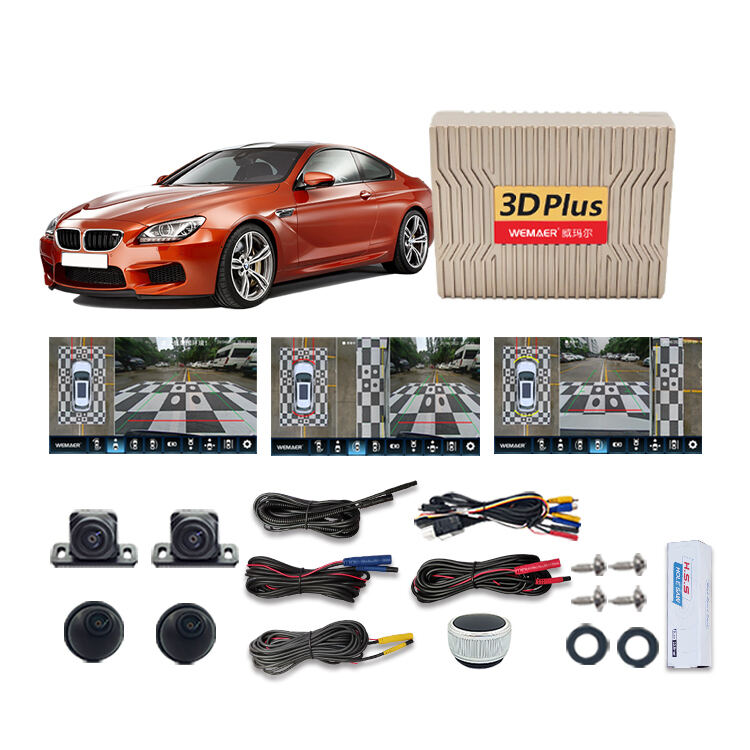
Why a 360 Parking Camera System Enhances Vehicle Safety and Driver Confidence
Rising Low-Speed Collisions in Urban Parking: The Blind Zone Problem
About half the time when cars get damaged while parking, it's because drivers can't see something right in front of them. The Insurance Institute for Highway Safety found back in 2023 that almost half (47%) of those slow speed crashes happen when people are trying to park in busy city areas. Regular side mirrors and even backup cameras don't cover everything around a vehicle properly. There are still big spots where drivers can't see what's happening close to the car, particularly next to curbs, building columns, and small objects on the ground. Things get really tricky in tight parking structures or packed downtown streets. Sometimes just missing by an inch or two leads to expensive bodywork costs, paint chips, or worse yet, someone getting hurt walking nearby. Some of the worst places where these hidden dangers lurk include:
- Front bumper areas, hidden during forward parking
- Rear wheel arches, concealing curbs during parallel parking
- A-pillar shadows, obscuring cross-traffic when exiting spaces
How Real-Time 360° Visual Fusion Eliminates Coverage Gaps
Modern 360 parking camera systems resolve blind zone risks through synchronized multi-camera processing, stitching feeds from four ultra-wide lenses into a unified top-down perspective. Unlike basic reversing cameras, these systems:
- Process feeds at under 100ms latency using dedicated SoCs (System-on-Chips)
- Dynamically calibrate distortions via fisheye correction algorithms
- Overlay distance gridlines accurate within 3cm
This real-time visual fusion enables drivers to identify pedestrians, shopping carts, and low obstacles within 20cm of the vehicle’s perimeter. Field studies show a 71% reduction in parking scrapes after system installation-demonstrating how seamless coverage transforms situational awareness.
Blind Zone vs. 360 Coverage Comparison
| Risk Factor | Traditional Mirrors | 360 Camera System |
|---|---|---|
| Front bumper visibility | Limited | Full coverage |
| Low-obstacle detection | 38% success rate | 92% success rate |
| Parking time | 42 seconds avg. | 28 seconds avg. |
| Collision probability | 1 in 8 maneuvers | 1 in 50 maneuvers |
Data: IIHS Parking Safety Report 2023
Core Technical Requirements for a Robust 360 Parking Camera System
HD IP-Based Cameras with On-Device AI Processing
HD IP cameras make up the core of good quality 360 degree parking systems, giving drivers those super clear wide angle shots covering over 190 degrees. These aren't your old school analog cameras though. Digital versions send crystal clear video without compression at speeds above 60 frames per second, which really helps when trying to park without seeing everything as blurry mess. What makes them stand out from other options? The smart processing right inside the device itself. Modern edge computing hardware actually looks at what's happening in the video feed as it happens, spotting things like curbs, people walking nearby, or anything else in the way in about a third of a second flat, all without needing internet connection. Keeping things cool matters too. Manufacturers have figured out ways to keep those powerful chips running under 85 degrees Celsius using passive cooling methods so they don't slow down after working hard for hours.
Precision Four-Step Calibration: From Lens Correction to Latency Validation
Achieving seamless 360° views demands rigorous calibration across four phases:
- Lens distortion correction, using polynomial algorithms to rectify fisheye curvature
- Pixel-level stitching, aligning overlapping camera feeds within 2mm accuracy
- Dynamic alignment, compensating for vehicle pitch/roll via gyroscopic sensors
- End-to-end latency validation, ensuring sub-100ms processing from capture to display
Looking at industry standards shows that systems that aren't properly calibrated can have spatial errors ranging from 15 to 40 centimeters right at bumper height, which means they might completely miss parking barriers. After calibration though, accuracy gets much better, down to less than 3 centimeters according to tests done by car manufacturers following standards such as ISO 16787. The last step checks how well different camera feeds stay synchronized. Systems that manage to keep timing differences below 1 millisecond using hardware timestamps actually get rid of those annoying ghost images that appear when vehicles make quick turns or sudden stops. Putting all these steps together turns what starts as separate video streams into one cohesive picture that works really fast for navigation purposes.
Top Implementation Pitfalls-and Proven Fixes for Reliable 360 Parking Camera System Performance
Deploying a 360 parking camera system demands precision to avoid critical failures that compromise safety. Two prevalent technical oversights undermine performance — here's how to resolve them.
Software-Only Stitching Without Hardware Synchronization
When we depend solely on software to combine those camera images, there's often noticeable gaps between them plus some lag time. If the hardware isn't properly synced up, frames just don't match right when moving slowly, especially while trying to park alongside other cars. Those little blind spots around 5 inches wide still hang around even after parking. Looking at what happened last year in city traffic, these visibility issues actually caused about one out of every four parking accidents according to recent studies. To get rid of this problem, many experts recommend adding special processing components specifically designed for correcting distortions prior to combining images. These chips cut down on image warping by roughly 40 percent and help maintain consistent video feeds in real time, which makes a big difference for drivers navigating tight spaces.
Ensuring Frame-Accurate Sync via Genlock or PTP Timing
When cameras get out of sync, we see those annoying choppy transitions or overlapping images, particularly problematic in setups with multiple cameras. Genlock, also known as generator locking, keeps everything aligned by connecting all cameras to a central master clock, which gets rid of those tiny delays between frames. Wireless systems have their own solution called Precision Time Protocol, or PTP for short. This method timestamps every single frame and can achieve accuracy down to fractions of a microsecond. Real world testing has demonstrated that PTP cuts down on timing errors caused by lag by around 57% compared to just relying on software synchronization alone. During setup, it's important to check the timing with strobe lights to ensure everything lines up correctly. The right hardware-based synchronization turns those messy video feeds into a smooth 360 degree picture. Studies indicate this approach actually reduces parking lot accidents by approximately 34% when done right, making it well worth the investment for proper implementation.
Validating Real-World Effectiveness: Metrics, OEM Benchmarks, and ROI
To really understand what difference a 360 parking camera makes, we need to look at three main areas: how well it works technically, what happens in real world operations, and whether it pays for itself financially. When testing technical aspects, manufacturers typically measure how much they reduce blind spots. Some top brands claim their cameras cover over 95% of dangerous zones around vehicles. Response time matters too. Systems that react faster than 200 milliseconds can actually stop accidents when drivers make sudden moves. Looking at actual usage data shows something interesting. Fleet managers who installed properly calibrated systems reported about 40% fewer minor parking incidents last year based on tracking data from their vehicles. Money talks as well. The return on investment calculation mixes upfront installation expenses with money saved through fewer repair bills, lower insurance premiums, and better resale prices for cars equipped with these systems. Research suggests most businesses see roughly 13 dollars back for every dollar spent after five years when all factors are considered. Car makers also test these systems rigorously. They subject them to extreme heat, cold, and constant vibrations to make sure they keep working reliably. This is where many cheaper aftermarket options tend to fail over time.
Ready to Eliminate Parking Blind Spots and Elevate Vehicle Safety with a Reliable 360° Camera System?
A high-performance 360° parking camera system is the irreplaceable cornerstone of safe, stress-free parking and low-speed maneuvering—no advanced driver assistance feature can deliver on its safety promise without a precise, stable, and fully calibrated panoramic vision system. By selecting a solution tailored to your vehicle models, operational scenarios, and long-term goals, you will unlock consistent accident reduction, measurable operational cost savings, and exceptional long-term ROI.
For industrial-grade, OEM-quality 360° AVM systems, automotive cameras, and dash cam solutions tailored to your fleet, OEM project, or aftermarket business, partner with WEMAER—a leading automotive vision provider with 15 years of deep industry expertise. As a national high-tech enterprise with China’s top production scale for car rearview cameras, 360° AVM systems, and dash cams, WEMAER houses a 30+ professional R&D team, holds over 100 technology patents, and ensures full compliance with global certifications including IATF 16949, CE, FCC, RoHS, and CQC. We support end-to-end OEM/ODM customization services, from logo and packaging design to deep UI and system-level tailored development, serving 20+ well-known automotive brands and exporting to more than 60 countries worldwide. Whether you need a universal retrofit solution for your existing fleet, or a factory-grade custom integrated system for automakers, we can build a high-performance, cost-effective solution for you. Contact us today for a no-obligation consultation and customized solution planning.
FAQ Section
What is a 360 parking camera system?
A 360 parking camera system uses multiple cameras to provide a comprehensive view of the vehicle's surroundings, reducing blind spots and enhancing driver safety by offering real-time images.
How does a 360 parking camera work?
The system uses synchronized multi-camera processing to stitch feeds from ultra-wide lenses into a unified view, providing full coverage of the vehicle's perimeter.
Do 360 camera systems require internet connection?
No, modern systems use edge computing hardware to process video feeds in real-time without needing an internet connection.
What are the main benefits of using a 360 parking camera system?
A 360 system significantly reduces collisions caused by blind spots, improves navigation ease in tight spaces, and enhances overall driver confidence.
Table of Contents
- Why a 360 Parking Camera System Enhances Vehicle Safety and Driver Confidence
- Core Technical Requirements for a Robust 360 Parking Camera System
- Top Implementation Pitfalls-and Proven Fixes for Reliable 360 Parking Camera System Performance
- Validating Real-World Effectiveness: Metrics, OEM Benchmarks, and ROI
- Ready to Eliminate Parking Blind Spots and Elevate Vehicle Safety with a Reliable 360° Camera System?
- FAQ Section