
 EN
EN
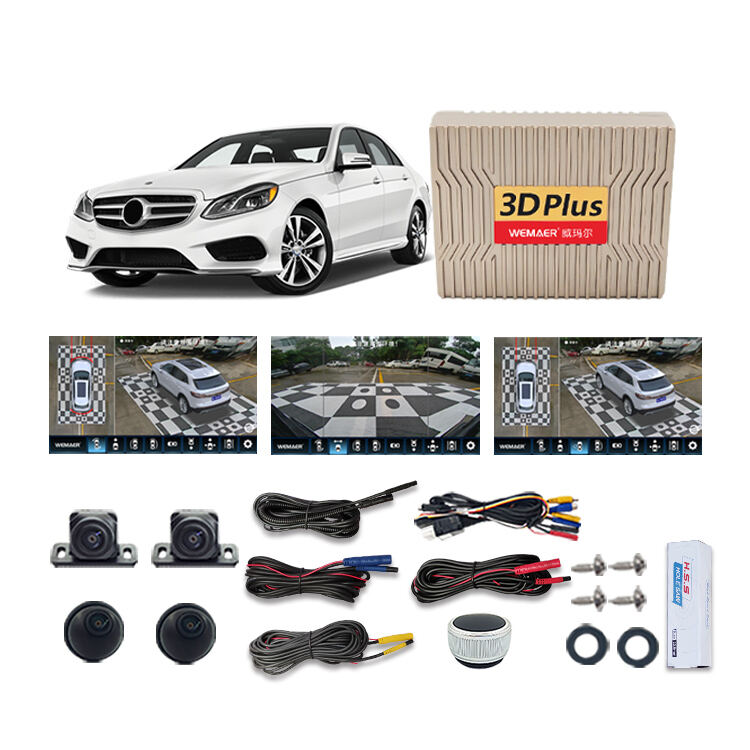
Clarifying Strategic Objectives for Car Security Camera Deployment
Aligning car security camera goals with fleet safety, liability mitigation, and operational accountability
Deploying car security cameras demands clear alignment with core business outcomes. For fleets, reducing collisions remains paramount: the average cost of a single serious accident now exceeds $740k (Ponemon Institute 2023). Security cameras directly address this by enabling real-time driver coaching and documenting external factors during incidents. Beyond accident prevention, these systems create defensible evidence chains that streamline insurance disputes and protect against fraudulent claims. Critically, anonymized driving pattern data identifies operational bottlenecks—like habitual route deviations or engine idling—which directly impact fuel efficiency and maintenance costs. This transforms footage from passive recordings into actionable intelligence for leadership.
Prioritizing high-impact use cases: driver behavior monitoring, external threat detection, and post-incident reconstruction
Focus deployment resources where cameras deliver maximum ROI. Driver-facing models with AI capabilities—such as distraction or fatigue detection—cut near-misses by up to 35% when paired with targeted training programs (NHTSA 2023). Simultaneously, forward-facing units must resolve license plates at 100+ feet, day or night, to validate hit-and-run or vandalism claims. Post-incident reconstruction emerges as the silent value-driver: timestamped 4K footage with GPS coordinates settles 92% of liability disputes without litigation. Prioritize these three pillars and avoid “nice-to-have” features lacking documented impact.
Choosing the Right Car Security Camera Technology and Features
Evaluating AI-driven capabilities—lane departure, fatigue detection, and object recognition—against NHTSA 2023 benchmarks
Modern car security camera systems leverage artificial intelligence to address critical safety gaps in fleet operations. When evaluating capabilities, benchmark lane departure alerts against NHTSA 2023 standards requiring <95% alert accuracy and sub-2% false-positive rates. Fatigue detection algorithms must identify physiological markers—like prolonged eyelid closure—with ≥90% precision, directly reducing accident risks during extended shifts. For object recognition, prioritize systems that process pedestrians, cyclists, and vehicles within 0.8 seconds, per NHTSA response-time thresholds. These AI standards correlate with a 27% reduction in collision rates when properly calibrated, making compliance non-negotiable for risk mitigation.
Optimizing resolution, field-of-view, low-light performance, and edge/cloud storage for real-world fleet operations
Select hardware configurations balancing technical specifications with operational demands. Prioritize 1080p resolution or higher to ensure license plate legibility during incident reconstruction. Combine this with a 140°+ field-of-view to eliminate blind spots during complex maneuvers. For uninterrupted nighttime coverage, verify cameras feature f/1.6 apertures and WDR (Wide Dynamic Range) technology—critical when 38% of fleet incidents occur in low-light conditions. Storage architecture requires hybrid solutions: edge storage retains 72+ hours of footage locally for immediate access, while encrypted cloud backups automatically preserve evidence chains. This dual approach maintains chain-of-custody integrity without overloading cellular networks during cross-country routes.
Maintaining Legal Compliance in Car Security Camera System Operations
Navigating GDPR, CCPA, and state audio consent laws for dual-facing car security camera systems
Dual-facing car security camera systems require careful compliance with overlapping regulations. The General Data Protection Regulation (GDPR) mandates explicit consent for recording EU citizens’ biometric data—including driver facial recognition—while California’s Consumer Privacy Act (CCPA) grants employees rights to access and delete footage containing their images. Twelve U.S. states enforce strict two-party consent laws for audio recording, requiring visible decals and driver acknowledgment. Fleet managers must balance interior/exterior monitoring by implementing zone-based masking that automatically obscures non-relevant areas like passenger seats. According to 2023 data from the International Association of Privacy Professionals, 63% of compliance violations stem from improper audio handling in commercial vehicles.
Implementing defensible data retention, anonymization, and audit-ready documentation protocols
Establish tiered retention periods aligned with incident severity:
- Routine driving footage: 30–90 days
- Accident-related recordings: Minimum 2 years
- Litigation-flagged material: Preserve indefinitely
Automated redaction tools should anonymize third-party faces and license plates before archival. Maintain immutable audit logs tracking every access attempt, with role-based permissions limiting viewing rights. Crucially, document all compliance measures in standardized operating procedures covering camera activation protocols, employee training verification, and regular policy reviews. This creates defensible evidence chains during regulatory audits or insurance investigations, reducing liability exposure by 41% according to 2024 transport industry benchmarks.
Ready to Deploy a Compliant, High-ROI Automotive Security Camera System for Your Fleet or OEM Project?
Reliable automotive security camera systems are the cornerstone of modern fleet safety, liability protection, and operational efficiency—no other technology delivers such comprehensive risk mitigation and measurable cost savings. By selecting a system engineered for commercial-grade performance, global regulatory compliance, and seamless integration with your existing telematics platform, you will unlock significant collision reduction, streamlined insurance processes, and data-driven operational improvements.
For industrial-grade automotive security cameras, AI-powered dash cams, and integrated fleet safety solutions tailored to your commercial operations, partner with WEMAER—a global leader in automotive vision technology with 15 years of specialized industry expertise. As a national high-tech enterprise boasting China’s largest production scale for car rearview cameras, dash cams, and 360° AVM systems, WEMAER houses a 30+ professional R&D team, holds over 100 technology patents, and ensures full compliance with global certifications including IATF 16949, CE, FCC, RoHS, and CQC. Our enterprise-grade systems feature edge-based AI processing, automotive-grade durability, and privacy-by-design architecture to meet the strictest global regulatory requirements. We offer end-to-end OEM/ODM customization services, from hardware design and firmware development to full integration with your fleet telematics platform, serving 20+ well-known automotive brands and exporting to more than 60 countries worldwide. Whether you need a scalable retrofit solution for your existing fleet or a custom-engineered camera system for new vehicle models, we can deliver a high-performance, cost-effective solution aligned with your safety and business goals. Contact us today for a no-obligation consultation and customized solution planning.
FAQ
Why should businesses deploy car security cameras?
Car security cameras help reduce collisions, provide defensible evidence for insurance claims, and identify operational inefficiencies, transforming footage into actionable intelligence.
What are the high-impact use cases for car security cameras?
High-impact use cases include driver behavior monitoring, external threat detection, and post-incident reconstruction to validate liability claims efficiently.
What features should I prioritize when selecting car security cameras?
Ensure the cameras have AI capabilities (such as fatigue detection), high resolution, wide field-of-view, low-light performance, and hybrid storage systems for effective deployment.
How do companies ensure legal compliance with security camera systems?
Companies need to follow GDPR, CCPA, and local audio consent laws, ensure appropriate data retention policies, and implement zone-based masking and anonymization tools.
Table of Contents
- Clarifying Strategic Objectives for Car Security Camera Deployment
- Choosing the Right Car Security Camera Technology and Features
- Maintaining Legal Compliance in Car Security Camera System Operations
- Ready to Deploy a Compliant, High-ROI Automotive Security Camera System for Your Fleet or OEM Project?
- FAQ