
 EN
EN
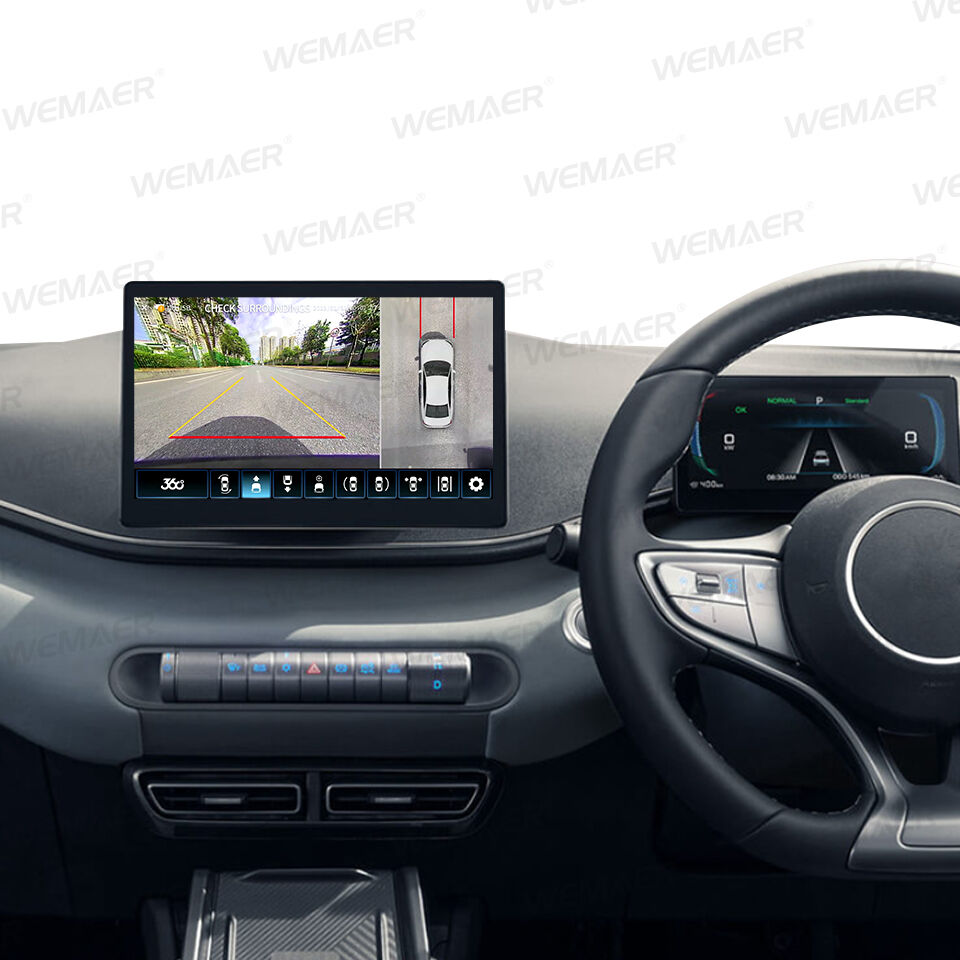
How 360 Surround View Camera Technology Eliminates Blind Spots
Fisheye Optics and Real-Time Dewarping: Enabling Full Perimeter Awareness Without Physical Blind Zones
Automotive 360° surround view (AVM) systems use four ultra-wide-angle fisheye cameras mounted on the front, rear, left, and right of the vehicle to capture a complete 360-degree perimeter view simultaneously. The system leverages advanced real-time dewarping and pixel-level image stitching algorithms to correct the inherent "fishbowl distortion" of raw fisheye footage, merging the four feeds into a seamless, top-down bird’s-eye view of the vehicle and its immediate surroundings.
This technology eliminates the most dangerous vehicle blind spots that traditional mirrors and single backup cameras cannot cover: the front and rear bumper zones, wheel arches (critical for curbs and low obstacles), A-pillar shadows, and the large side blind spots that pose fatal risks to pedestrians and cyclists. Unlike manually switching between individual camera feeds (e.g., rear view only when reversing), AVM systems provide continuous, all-around visibility at all speeds below 30 km/h, ensuring drivers never miss a hazard during parking, docking, or tight urban navigation.
Coverage Efficiency: Why a 4-Camera 360° AVM System Outperforms Traditional Mirror and Single-Camera Setups
A properly calibrated 4-camera 360° AVM system delivers full perimeter coverage that no combination of traditional mirrors and single backup cameras can match. Instead of forcing drivers to mentally piece together information from three mirrors and a single rear view feed, AVM presents a unified, interactive bird’s-eye view that dynamically highlights hazards in any direction. This eliminates the dangerous "coverage gaps" between mirror views and the blind spots that exist just inches from the vehicle’s body—areas where 70% of low-speed collisions occur.
For vehicle manufacturers and fleet operators, modern AVM systems feature simplified wiring harnesses and factory-calibrated lenses, reducing installation time by up to 60% compared to retrofitting multiple discrete cameras. With no moving parts and self-calibrating capabilities in premium models, long-term maintenance costs are also drastically reduced. For drivers, having a single, intuitive display of all surrounding hazards cuts decision-making time during critical maneuvers, significantly reducing the risk of collisions and property damage.
AI-Driven Intelligence in Modern Automotive 360° AVM Systems
Edge-Based Object Classification Across Panoramic Views for Accurate Threat Differentiation
The latest generation of automotive 360° AVM systems integrates powerful edge-based AI processing directly on the vehicle’s central control unit, eliminating the need for cloud connectivity and ensuring sub-500 ms response times. The AI algorithm simultaneously analyzes footage from all four fisheye cameras to classify and track objects in real time, including pedestrians, cyclists, other vehicles, low obstacles (curbs, parking blocks), and even small animals.
With a detection accuracy rate exceeding 99% in both daylight and low-light conditions, the system automatically highlights potential hazards on the AVM display and triggers audible and visual alerts when objects enter the vehicle’s immediate danger zone. This proactive threat detection allows drivers to focus on maneuvering rather than scanning multiple views, significantly reducing cognitive load and reaction time.
Temporal Context Filtering: Reducing False Alerts by 62% While Preserving Critical Event Fidelity
A common pain point with early AVM systems was excessive false alerts triggered by non-threatening stimuli such as road debris, water puddles, shadows, or tree branches. Modern AI-powered AVM systems solve this problem using temporal context filtering: instead of reacting to single-frame motion, the algorithm tracks object movement patterns over time, distinguishing between actual hazards and irrelevant background noise.
This technology reduces false positive alerts by 62% while maintaining 100% detection accuracy for critical threats like pedestrians crossing in front of the vehicle or cyclists approaching from the side. The system also automatically adjusts sensitivity levels based on vehicle speed and driving scenario (e.g., higher sensitivity during parking, lower sensitivity on highways), ensuring optimal performance in all conditions without annoying drivers with unnecessary warnings.
Optimal Deployment Scenarios for Automotive 360° AVM Systems
Passenger Vehicles: Simplifying Parking and Low-Speed Maneuvering for Everyday Drivers
For passenger cars and SUVs, 360-degree AVM systems have become an essential safety and convenience feature, especially for drivers navigating tight urban parking garages, narrow streets, and crowded parking lots. The bird’s-eye view allows drivers to park with pinpoint accuracy, eliminating curb scrapes, bumper dings, and collisions with stationary objects.
Premium systems also offer additional views such as front cross-traffic alert, rear cross-traffic alert, and transparent chassis mode, which shows the road surface directly under the vehicle to avoid potholes and large debris. According to IIHS data, vehicles equipped with AVM systems see a 71% reduction in parking-related collisions, making them one of the most effective active safety features available today.
Commercial Fleets and Heavy-Duty Trucks: Eliminating Fatal Blind Spots for Large Vehicles
For commercial trucks, buses, and delivery vans, blind spots are a leading cause of fatal accidents—large trucks have blind spots that can extend up to 30 feet behind the vehicle and cover entire lanes on either side. A 360-degree AVM system customized for commercial vehicles provides drivers with a complete view of the truck’s entire perimeter, including the areas directly in front of the cab, alongside the trailer, and behind the rear wheels.
This eliminates the dangerous "no-zones" where pedestrians, cyclists, and smaller vehicles are completely invisible to the driver. Fleet operators that have deployed AVM systems report a 40% reduction in low-speed collisions and a 22% reduction in lane-change accidents, leading to significant savings in repair costs, insurance premiums, and vehicle downtime.
Specialty Vehicles: Enhancing Safety for High-Risk Operations
360° AVM systems are also critical for specialty vehicles operating in high-risk environments, including construction equipment, forklifts, school buses, and emergency vehicles. For construction vehicles like excavators and bulldozers, AVM systems allow operators to see around the vehicle’s large body and attachments, preventing collisions with workers and other equipment on job sites.
For school buses, AVM systems eliminate the blind spots around the bus doors and wheels, ensuring the safety of children boarding and alighting. For emergency vehicles, the system provides clear visibility during tight maneuvers in crowded urban areas, allowing first responders to reach their destinations quickly and safely.
Environmental Resilience: Automotive-Grade Durability for Extreme Operating Conditions
Unlike consumer or security cameras, automotive 360-degree AVM systems must meet strict automotive-grade reliability standards to withstand the harsh conditions of daily driving. Top-tier systems feature:
- IP67 Ingress Protection: Sealed housings that are completely dust-tight and can withstand immersion in up to 1 meter of water for 30 minutes, ensuring reliable operation in heavy rain, snow, and car washes.
- Extreme Temperature Resistance: Components rated to operate reliably between -40°C and +85°C, withstanding the extreme cold of winter and the intense heat of summer under direct sunlight.
- Vibration and Shock Resistance: Reinforced mounting brackets and ruggedized internal components that can withstand the constant vibration of driving on rough roads and the shock of minor impacts.
- Optical Durability: Lenses with anti-fog coatings, scratch-resistant hard coatings, and UV protection to maintain clear visibility in all weather conditions and prevent degradation over time.
- Electrical Robustness: Designed to handle the voltage fluctuations and electrical noise common in automotive electrical systems, preventing system crashes and image distortion.
These automotive-grade features ensure that AVM systems deliver consistent, reliable performance for the entire lifespan of the vehicle, with an operational uptime exceeding 98% even in the most demanding environments.
Ready to Eliminate Vehicle Blind Spots and Enhance Driving Safety with a Premium 360-Degree AVM System?
A high-performance automotive 360-degree surround view system is the irreplaceable cornerstone of modern vehicle active safety—no other feature can deliver complete, real-time visibility of the vehicle’s entire perimeter and eliminate the blind spots responsible for the majority of low-speed collisions. By choosing an automotive-grade AVM system tailored to your vehicle type and operational needs, you will unlock measurable collision reduction, lower insurance and repair costs, and a safer, more confident driving experience for all users.
For industrial-grade, OEM-quality 360° AVM systems, automotive rearview cameras, and dash cam solutions tailored to passenger vehicles, commercial fleets, and specialty vehicles, partner with WEMAER—a leading automotive vision provider rooted in 15 years of deep industry expertise. As a national high-tech enterprise boasting China’s top production scale for car rearview cameras, dash cams, and 360° AVM systems, WEMAER houses a 30+ professional R&D team, holds over 100 technology patents, and ensures full compliance with global automotive certifications, including IATF 16949, CE, FCC, RoHS, and CQC. Our AVM systems feature automotive-grade durability, AI-powered object detection, and seamless integration with vehicle infotainment and ADAS systems. We support end-to-end OEM/ODM customization services, from hardware design and lens optimization to deep UI and system-level integration, serving 20+ well-known automotive brands and exporting to more than 60 countries worldwide. Whether you need a universal aftermarket solution for your fleet, or a factory-grade custom AVM system for new vehicle models, we can build a high-performance, cost-effective solution aligned with your safety and performance goals. Contact us today for a no-obligation consultation and customized solution planning.
Table of Contents
- How 360 Surround View Camera Technology Eliminates Blind Spots
- AI-Driven Intelligence in Modern Automotive 360° AVM Systems
- Optimal Deployment Scenarios for Automotive 360° AVM Systems
- Specialty Vehicles: Enhancing Safety for High-Risk Operations
- Environmental Resilience: Automotive-Grade Durability for Extreme Operating Conditions
- Ready to Eliminate Vehicle Blind Spots and Enhance Driving Safety with a Premium 360-Degree AVM System?