
 EN
EN
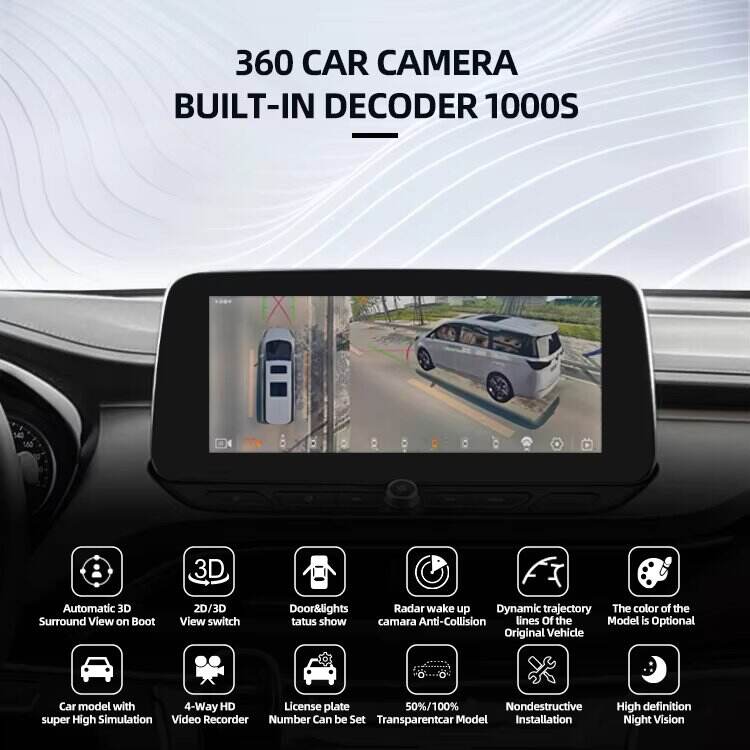
How 360 Car Camera Systems Deliver Measurable ROI Across Safety, Costs, and Operations
Reducing At-Fault Accidents and Insurance Claims Through Comprehensive 360° Visibility
360 car camera systems eliminate blind spots by delivering real-time, panoramic visibility around the vehicle—preventing common collision scenarios like sideswipes during lane changes or impacts with low-visibility objects. Fleets using this technology report a 45% reduction in backing accidents (VestigeView 2023). The synchronized, timestamped footage serves as definitive evidence during insurance investigations, accelerating fault determination and reducing claim payouts. This dual benefit—proactive prevention and objective documentation—lowers insurance premiums and preserves clean safety records.
Cutting Downtime and Repair Costs with Verifiable Incident Context and Liability Protection
When incidents occur, 360-degree footage delivers irrefutable context that protects fleets from fraudulent claims and streamlines resolution. According to Ponemon Institute research, fleets save an average of $740k annually by rejecting false claims—enabled by video evidence that clarifies liability on first review. Faster adjudication cuts vehicle downtime by 32%, boosting fleet utilization by 18%. Precise impact visualization also improves damage assessment accuracy, lowering repair costs by 27%. Critically, the presence of visible cameras encourages consistent, accountable driving behavior—reducing reckless maneuvers before they escalate into collisions or costly repairs.
| Impact Area | Outcome | Financial Benefit |
|---|---|---|
| Fraudulent Claims | 80% reduction in successful false claims | $740k annual savings (Ponemon 2023) |
| Repair Downtime | 32% faster claim resolution | 18% higher fleet utilization |
| Driver Accountability | 41% fewer reckless driving incidents | 27% lower collision repair costs |
Aligning 360 Car Camera Capabilities With High-Impact Fleet KPIs
Tracking Harsh Event Rate, Near-Miss Detection, and Coaching Completion to Quantify Behavioral ROI
Modern 360 car camera systems go beyond recording—they generate objective behavioral data that directly ties to core fleet KPIs. By capturing multi-angle footage of driving events, these systems convert subjective observations into quantifiable metrics: harsh braking, lane departures, and near-misses are detected consistently and without bias. Telematics-integrated deployments show a 43% reduction in harsh braking incidents within three months of rollout. This data drives measurable ROI through:
- Lower insurance premiums from fewer at-fault claims
- Reduced maintenance costs due to smoother acceleration and braking
- More effective coaching—92% completion rates when drivers review their own footage—cutting training time by 37% versus traditional methods
Visual feedback closes the loop between observation, insight, and improvement—making accountability tangible and behavior change sustainable.
Leveraging AI-Powered Analytics to Shift from Reactive Review to Predictive Driver Development
AI transforms 360 camera systems from passive recorders into proactive risk-mitigation tools. By analyzing patterns across thousands of driving events—including subtle cues like micro-lane drifts, prolonged glances away from the road, or inconsistent following distances—machine learning identifies high-risk drivers 58% earlier than manual review alone. Unlike reactive incident analysis, AI-powered platforms detect emerging risk before collisions occur, enabling timely, targeted coaching. Fleet benchmarks confirm this shift reduces preventable accidents by up to 32% while cutting video review time by 76%. The result is not just safer driving—it’s a strategic development platform that turns raw footage into predictive intelligence.
Optimizing 360 Car Camera Deployment for Maximum Real-World ROI
Strategic Placement, Calibration, and Integration Best Practices That Prevent Data Gaps and False Positives
Maximizing ROI begins with precise deployment. Cameras must be mounted to cover all critical blind zones—front bumper, rear, and side mirror areas—without obstructing the driver’s line of sight. Optimal height and angle ensure seamless stitching of the bird’s-eye view. Equally important is calibration: misaligned lenses distort perspective, triggering false alerts or missing hazards entirely. Technicians should use manufacturer-provided targets and software to align each lens with precision. Integration with existing telematics platforms—via GPS and CAN-bus synchronization—ensures video events are contextualized with speed, location, and vehicle diagnostics. This unified data flow eliminates gaps, reduces alert fatigue, and builds driver trust in the system’s reliability.
Why Night Vision Performance, Edge Processing, and Fleet Management Platform Compatibility Directly Impact TCO and ROI
Three technical capabilities determine long-term value: night vision, edge processing, and platform compatibility. High-fidelity low-light performance—enabled by infrared illumination or advanced CMOS sensors—maintains visibility in dark loading docks, rural roads, or overnight shifts, preventing avoidable nighttime incidents and associated repair and liability costs. Edge processing analyzes footage onboard, eliminating the need to stream raw video—slashing bandwidth fees, cloud storage costs, and latency for real-time alerts. Finally, native integration with leading fleet management platforms avoids expensive middleware, manual exports, or duplicate data entry. When these features work in concert, 360 camera systems deliver higher ROI—not just through fewer collisions, but through lower operational overhead and faster, more confident decision-making across safety, maintenance, and compliance workflows.
FAQ
What are 360 car camera systems?
360 car camera systems are advanced technologies providing a full, panoramic view around a vehicle. They eliminate blind spots, enhance driver visibility, and record events for safety and performance improvement.
How do 360 cameras reduce fleet accidents?
By offering real-time visibility and alerting drivers to potential hazards, 360 cameras prevent common collision scenarios like sideswipes or backing accidents. The recordings also help with post-incident liability investigations.
Can these cameras help prevent fraudulent insurance claims?
Yes, 360-degree footage delivers irrefutable evidence that clarifies liability, helping fleets reject false claims and reduce insurance payouts.
What role does AI play in these systems?
AI-powered analytics identify risky driving behaviors earlier than manual monitoring, allowing fleets to implement proactive measures and reduce preventable accidents.
What are the best practices for installing a 360 camera system?
Strategic placement covering all vehicle blind zones, precise calibration, and integration with telematics platforms ensure accurate data, reduced gaps, and optimal driver trust.