
 EN
EN
Why View Car in 360 Degree Is Critical for Post-Purchase Safety
The Blind Spot Crisis: How Urban Density and Larger Vehicles Increase Collision Risk
Urban density and the growing prevalence of larger vehicles—especially SUVs and trucks—create dangerous blind spots that traditional mirrors cannot address. These vehicles have 40% larger blind zones than sedans, concealing pedestrians, curbs, poles, and cyclists during low-speed maneuvers. In tight parking garages and congested streets, rear-only cameras fail to reveal adjacent hazards, widening the visibility gap. This shortfall contributes directly to parking-related incidents accounting for 30% of all automotive insurance claims—a preventable risk in today’s vehicle landscape.
Real-Time Spatial Awareness as a Preventive Safety Layer
A 360-degree camera system transforms fragmented visual input into a unified, real-time top-down perspective by stitching feeds from four fisheye lenses mounted around the vehicle. Unlike single-angle cameras, it eliminates blind zones entirely—revealing low-lying obstacles, wheel proximity to curbs, and nearby movement invisible from the driver’s seat. This continuous environmental scanning enables proactive hazard avoidance, especially during complex urban maneuvers like parallel parking or slow-speed alley navigation—where spatial judgment errors drive most low-speed collisions.
How 360-Degree Camera Systems Reduce Real-World Incidents
Data-Driven Impact: 27% Drop in Parking-Related Claims After Adoption (IIHS, 2023)
According to the Insurance Institute for Highway Safety (IIHS), vehicles equipped with integrated 360-degree camera systems saw a 27% reduction in parking-related collision claims in 2023. By delivering a seamless aerial view, the technology enhances spatial awareness in tight urban spaces and crowded lots—preventing scrapes, curb strikes, and pedestrian close calls. Fleet studies further show up to 40% improvement in curb damage avoidance and trailer alignment accuracy, underscoring its role as a digital safety net that compensates for both vehicle design constraints and shrinking infrastructure.
NHTSA Field Insights: Driver Confidence vs. Overreliance Behavior Shifts
NHTSA field data reveals a dual behavioral impact: 68% of drivers report increased confidence during complex maneuvers, yet 15% exhibit concerning overreliance—checking mirrors 30% less frequently during parking sequences. System limitations—such as reduced functionality during heavy rain or camera obstruction—introduce new risks when drivers disengage from direct observation. However, training that emphasizes transitional awareness—shifting intentionally between screen views and physical mirror checks—reduces overreliance by 53%. Leading manufacturers now embed haptic steering wheel alerts to prompt re-engagement with the driving environment, reinforcing the principle that technology supports—not replaces—core driving skills.
Key Components and Performance Standards for Reliable 360 Degree Car Views
Fisheye Cameras, Low-Latency Processing (<120ms), and Seamless Display Integration
Three technical pillars define a reliable 360-degree system: ultra-wide fisheye lenses positioned at each corner capture critical near-wheel blind spots missed by mirrors; image processing latency under 120 milliseconds ensures hazard feedback aligns with human reaction time; and seamless integration into the vehicle’s native display minimizes cognitive load with a clean, intuitive bird’s-eye interface. Industry standards—including those referenced in UNECE Regulation 159—now codify these requirements to prevent calibration drift, frame drops, and display lag that undermine real-time decision-making.
Practical Applications: Parking, Blind Spot Monitoring, and Urban Navigation
The ability to view car in 360 degree delivers tangible safety benefits across three high-frequency scenarios. During parking, overhead visualization eliminates uncertainty around curbs and stationary objects—cutting minor collisions by up to 30%, per traffic safety analysts. For lane changes, dynamic blind spot overlays provide immediate visual cues about adjacent vehicles, reducing sideswipe incidents in dense traffic. Most significantly, in urban navigation—especially at tight intersections, pedestrian-heavy zones, or multi-lane roundabouts—the fused camera feed displays proximity to cyclists, signage, and roadside structures within 1.5 meters, enabling precise, confident maneuvering without constant head-turning.
Ready to Enhance Post-Purchase Safety and Customer Satisfaction with Premium 360-Degree AVM Systems?
A high-performance 360-degree surround view system is the cornerstone of modern vehicle active safety and post-purchase customer loyalty—no other technology delivers such comprehensive blind spot elimination and measurable collision reduction. By integrating an automotive-grade 360° AVM system engineered to global regulatory standards, you will elevate your vehicle’s safety ratings, reduce fleet operational costs, and provide drivers with the confidence to navigate any environment safely.
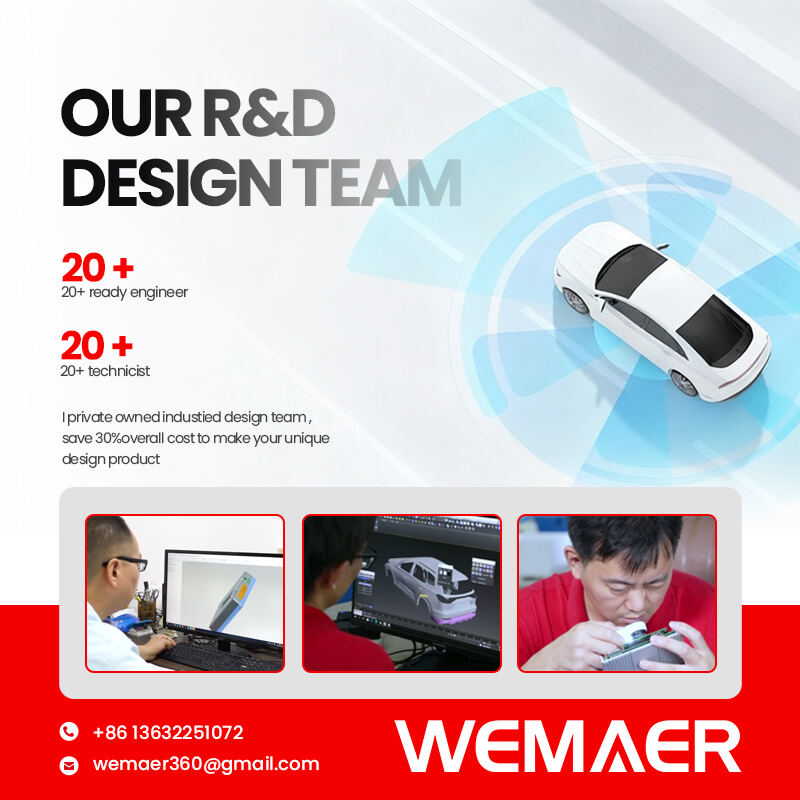
For OEM-quality 360° AVM systems, automotive rearview cameras, and integrated active safety solutions tailored to passenger vehicles, commercial fleets, and specialty vehicles, partner with WEMAER—a global leader in automotive vision technology with 15 years of specialized industry expertise. As a national high-tech enterprise boasting China’s largest production scale for car rearview cameras, dash cams, and 360° AVM systems, WEMAER houses a 30+ professional R&D team, holds over 100 technology patents, and ensures full compliance with global certifications including IATF 16949, CE, FCC, RoHS, and CQC. Our systems feature sub-100ms low-latency processing, AI-powered object detection, and seamless integration with native vehicle infotainment and ADAS platforms. We offer end-to-end OEM/ODM customization services, from hardware design and lens optimization to deep UI and system-level integration, serving 20+ well-known automotive brands and exporting to more than 60 countries worldwide. Whether you need a factory-integrated solution for new vehicle models or a scalable retrofit system for your commercial fleet, we can deliver a high-performance, cost-effective solution aligned with your safety and business goals. Contact us today for a no-obligation consultation and customized solution planning.
FAQ
What is a 360-degree car camera system?
A 360-degree car camera system integrates feeds from four fisheye cameras mounted around the vehicle to create a real-time, top-down view of the car and its surroundings, eliminating blind spots.
How does a 360-degree camera improve driving safety?
These systems improve safety by providing comprehensive visibility of obstacles, curbs, pedestrians, and cyclists during parking, lane changes, and urban navigation, reducing low-speed collision risks.
What are the limitations of 360-degree car cameras?
Limitations include reduced functionality in heavy rain or when cameras are obstructed by dirt, as well as the potential for driver overreliance if not used alongside mirrors and direct observation.
Are 360-degree cameras effective in preventing parking collisions?
Yes, studies, including IIHS data, show a 27% reduction in parking-related collision claims for vehicles equipped with these systems, as they provide clear overhead visualization in tight spaces.
Table of Contents
- Why View Car in 360 Degree Is Critical for Post-Purchase Safety
- How 360-Degree Camera Systems Reduce Real-World Incidents
- Key Components and Performance Standards for Reliable 360 Degree Car Views
- Practical Applications: Parking, Blind Spot Monitoring, and Urban Navigation
- Ready to Enhance Post-Purchase Safety and Customer Satisfaction with Premium 360-Degree AVM Systems?
- FAQ