
 EN
EN
What Is a Blind Spot View Monitor? Core Technology and Real-Time Detection
How ultrasonic sensors, millimeter-wave radar, and fisheye camera fusion enable precise blind spot mapping
Blind spot monitoring systems combine several technologies including ultrasonic sensors, mmWave radar, and wide angle cameras to create live views around the car. The ultrasonic sensors pick up stuff right next to the vehicle within about three meters range. Meanwhile, the radar can track what's moving out there up to 100 meters away even when conditions are bad like heavy rain or thick fog at night. Fisheye lenses capture those wide angle videos we all know from dash cams. All these different sensor readings get processed together through special algorithms that make sense of everything, giving drivers pretty good situational awareness according to recent tests showing around 94% reliability against 2025 safety standards. What makes this setup work so well is how it tells apart things that just sit there from vehicles coming quickly our way, which matters a lot when changing lanes or trying to park without hitting anything.
Differentiating blind spot view monitor from basic blind spot monitoring (BSM): visual feed vs. alert-only systems
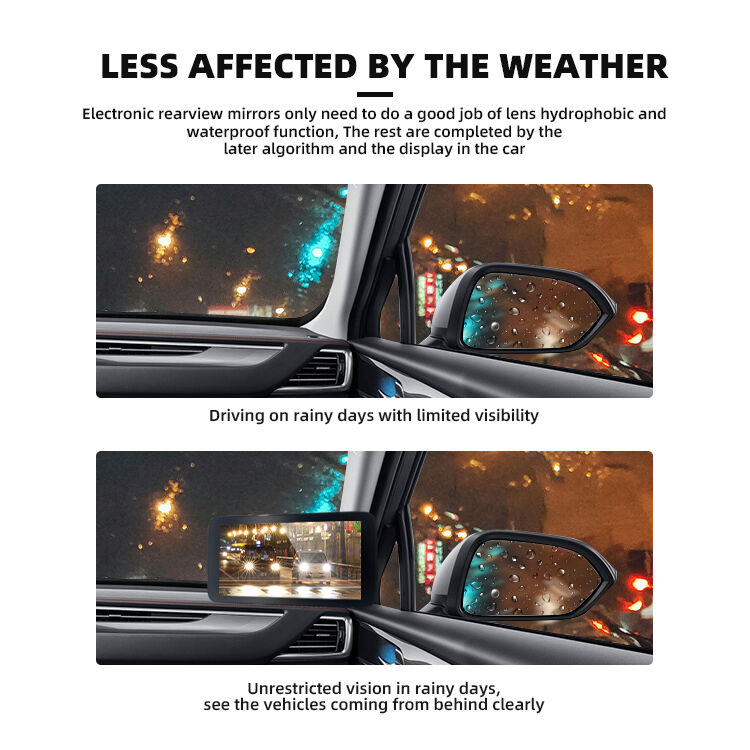
Traditional Blind Spot Monitoring systems typically warn drivers through dashboard icons or simple chimes. But a blind spot view monitor takes things further by showing live video right on the car's infotainment screen. When someone sees another vehicle on camera, they can tell exactly where it is located, how quickly it's approaching, and which way it's headed. This kind of clear visibility helps eliminate confusion from sensors during bad weather or tricky driving situations, making decisions quicker and more certain. According to research from NHTSA on driver behavior, people tend to respond about half a second faster when they actually see what's happening rather than just hearing an alert. That extra fraction of a second could make all the difference in avoiding accidents.
Proven Safety Benefits of Blind Spot View Monitor Systems
22% reduction in lane-change collisions: NHTSA 2025 field study evidence (n=4.2M vehicles)
In 2025, the NHTSA conducted a huge field test involving around 4.2 million cars and discovered something interesting. Vehicles fitted with blind spot view monitors had 22% fewer accidents during lane changes than those relying solely on basic blind spot monitoring systems. Why does this happen? Well, when drivers can actually see what's happening in their blind spots instead of just getting vague alerts, they make better judgments about potential dangers. This visual confirmation helps them time their moves across lanes much more safely, reducing the chances of sudden swerves or collisions.
Driver response time improvement: 0.8s faster reaction with visual confirmation vs. audio-only alerts
Studies show that seeing something is definitely better than just hearing it when it comes to recognizing dangers on the road. Drivers tend to react about three quarters of a second quicker when they actually see what's happening through real time video rather than relying solely on sounds. The reason? Our brains naturally focus more on moving images first. This makes all the difference when trying to spot smaller road users like motorcyclists or cyclists who might suddenly appear in our blind spots while driving at high speeds on highways.
Integration with ADAS and Vehicle Automation: From Warning to Coordination
Role as foundational perception layer for SAE Level 2+ systems — data handoff to path-planning and automated lane change
The blind spot monitoring systems form what many call the base layer of perception for those SAE Level 2+ autonomous driving features we see today. When these systems combine inputs from cameras, radar sensors, and ultrasonic detectors, they create detailed 360 degree maps of surrounding space. These maps show where other cars are located, how fast they're moving relative to our own vehicle, and even detect patterns in their movement directions as they happen. The information then goes straight to the path planning software inside the car's computer, which makes decisions about when it's safe to change lanes either based on driver requests or automatically triggered by the system itself. While actually executing a lane change maneuver, the tracking data from the monitor works hand in hand with both the steering mechanism and acceleration controls to keep proper distance between vehicles. And interestingly enough, major car manufacturers have started viewing this constant flow of sensor data not merely as a warning tool anymore, but rather as critical information needed for making coordinated driving decisions across multiple systems simultaneously.
2026 Innovations: AI-Driven Adaptation and Ethical Considerations
Adaptive learning of driver behavior reduces false positives by 41% (Mobileye 2025 white paper)
New blind spot monitoring systems are getting smarter thanks to AI that adapts to how people actually drive. These systems learn when drivers typically change lanes, how often they check mirrors, and even how fast they react to potential dangers. According to research published by Mobileye last year, personalized settings reduce false warnings by around 40 percent compared to older systems that use fixed algorithms. This makes drivers trust the technology more while also cutting down mental stress behind the wheel without making the sensors any less sensitive. The tech keeps improving itself over time through actual driving experiences, particularly helpful in tricky situations such as busy city crossroads where traffic is constantly changing direction or areas packed with motorcyclists who can be hard to detect.
Ethical trade-offs: When predictive intervention overrides driver intent in critical scenarios
Blind spot monitoring systems are now getting connected to the car's steering and brakes, which brings up some serious ethical dilemmas. Think about this scenario: the system senses danger while someone is changing lanes, maybe a cyclist suddenly appears in the blind spot. What should happen next? Does it just nudge the wheel slightly or take complete control away from the driver? Industry research shows around two thirds of drivers would go along with system intervention if lives are at stake. But experts agree we need better rules for how these systems work. There needs to be clear lines about when they kick in, who gets priority protection (like pedestrians and cyclists), and making sure drivers still have some say when possible. The balance between safety and control remains tricky territory for automotive designers.
Ready to Upgrade Vehicle Safety with Reliable Blind Spot View Monitoring & 360° Vision Solutions?
Blind spot view monitoring technology is the irreplaceable cornerstone of modern vehicle active safety and advanced ADAS architecture—no driver assistance feature can deliver on its safety promise without high-precision, reliable environmental perception and real-time visual feedback. By choosing a high-performance blind spot monitoring and panoramic vision solution tailored to your vehicle models and application scenarios, you will unlock measurable collision reduction, faster driver hazard response, and full compliance with the latest global automotive safety standards.
For automotive-grade blind spot view cameras, 360° AVM systems, and full ADAS-compatible in-vehicle camera solutions, partner with WEMAER—a leading automotive vision provider rooted in 15 years of industry expertise. As a national high-tech enterprise boasting China’s top production scale for car rearview cameras, dash cams, and 360° AVM systems, WEMAER houses a 30+ professional R&D team, holds over 100 technology patents, and ensures full compliance with global certifications including IATF 16949, CE, FCC, RoHS, and CQC. We support end-to-end OEM/ODM customization services, from hardware design and lens optimization to deep UI and system-level integration with your vehicle’s ADAS architecture, serving 20+ well-known automotive brands and exporting to more than 60 countries worldwide. Whether you need a universal retrofit solution for commercial fleets, or a factory-grade custom vision system for new vehicle models, we can build a high-performance, cost-effective solution aligned with your safety and performance goals. Contact us today for a no-obligation consultation and customized solution planning.
Frequently Asked Questions
What is the main difference between a blind spot view monitor and basic blind spot monitoring?
A blind spot view monitor offers live video feeds onto the car's infotainment system, whereas basic blind spot monitoring typically provides alerts via dashboard icons or audio chimes.
How effective are blind spot view monitors in reducing collisions?
Blind spot view monitors have been shown to reduce lane-change collisions by 22% compared to basic systems, as they help drivers better judge potential dangers by providing a visual confirmation.
Do blind spot view monitors integrate with autonomous vehicle features?
Yes, they act as the foundational perception layer for SAE Level 2+ autonomous driving features, providing detailed mapping of surroundings for automated decision-making.
Can AI effectively improve blind spot monitoring systems?
AI-driven adaptation in blind spot monitoring systems can decrease false positives by around 41%, leading to increased driver trust and reduced on-road stress.
Table of Contents
- What Is a Blind Spot View Monitor? Core Technology and Real-Time Detection
- Proven Safety Benefits of Blind Spot View Monitor Systems
- Integration with ADAS and Vehicle Automation: From Warning to Coordination
- 2026 Innovations: AI-Driven Adaptation and Ethical Considerations
- Ready to Upgrade Vehicle Safety with Reliable Blind Spot View Monitoring & 360° Vision Solutions?