
 EN
EN
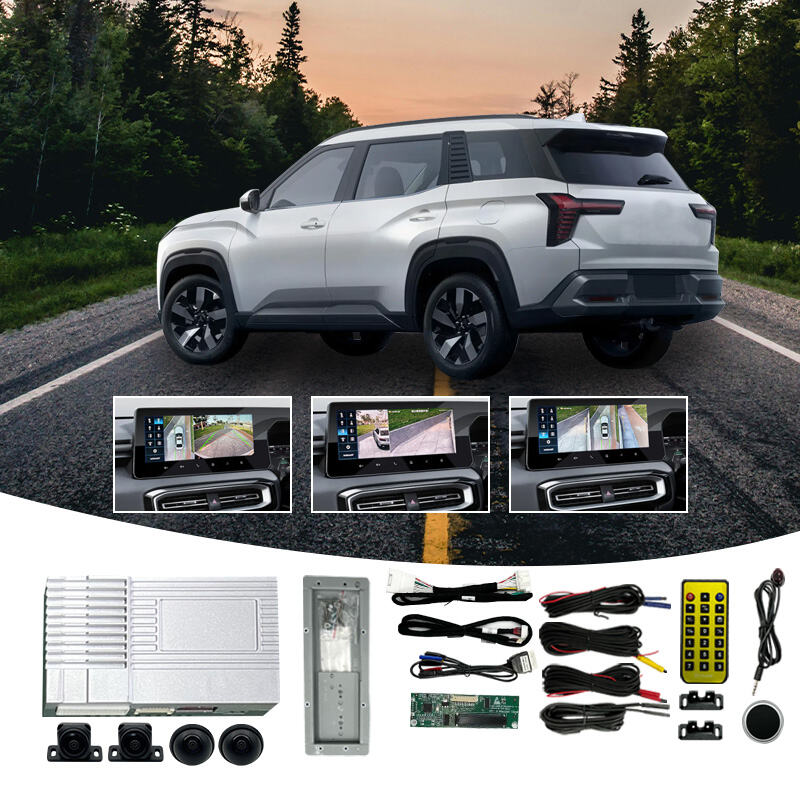
Eliminating Blind Spots: The Core Safety Imperative of a 360 Degree Camera for Car
How Surround-View Technology Removes Life-Threatening Blind Zones
Surround view camera systems help get rid of those dangerous blind spots around cars. They work by combining video from four wide angle lenses mounted at the front, back, and sides of the car into one big picture shown on the dashboard screen. Regular mirrors just don't cut it when it comes to seeing everything around the car. There are plenty of spots near the bumpers, wheel wells, and those A pillars where people walking, bikes, or small things sitting on the ground simply disappear from view. These blind spots lead to a lot of fender benders, especially when driving around cities or trying to park somewhere tight. The good news is these 360 degree systems can spot anything within about ten feet of the car. According to the National Safety Council, this is exactly where 40 percent of parking related accidents happen. So basically, what these systems do is fix the biggest problem drivers face in crowded areas: not being able to see what's right there next to them.
Statistical Proof: Up to 32% Reduction in Low-Speed Collisions with 360 Degree Camera for Car
A 2023 industry analysis of over 15,000 vehicles found that models equipped with surround-view systems experienced 32% fewer low-speed collisions (<25 mph) than comparable non-equipped models. This reduction is most impactful in high-risk scenarios:
| Collision Scenario | Reduction Rate | Primary Contributing Factor |
|---|---|---|
| Parking lot accidents | 34% | Eliminated pillar/curb blind spots |
| Pedestrian incidents | 29% | Enhanced cross-traffic visibility |
| Lane-change collisions | 31% | Side obstacle detection |
What makes this tech really stand out is how well it spots small stuff below 18 inches high shopping carts, baby strollers, even those pesky curbs that trip people up all the time these are things regular sensors just miss completely. And there's real money to be saved here too. Insurance companies have started giving drivers around 8 to 12 percent off their premiums when they come with those full circle cameras built in from the factory. Makes sense really, since we know cars equipped with these systems get into far fewer minor accidents and therefore make fewer insurance claims overall.
Real-World Operational Benefits: Parking, Maneuvering, and Urban Navigation
Effortless Parallel Parking and Tight-Space Maneuvering via Seamless Stitched Views
The latest 360 degree camera setups have really changed how drivers handle parallel parking situations and navigate tight spots. They work by creating a live composite image from all around the car, with those helpful green lines showing where the wheels will go as soon as someone turns the steering wheel. What makes these systems so good is their ability to give almost pinpoint spatial awareness, even when there's barely enough room to squeeze in. Some tests indicate these cameras can slash paint damage during parking attempts by about 70 something percent, and they definitely make getting through crowded multi story parking structures much faster. The big advantage comes from seeing things regular mirrors miss completely. Drivers can spot curbs, overhead signs, and thin support columns that would otherwise be hidden until it's too late. Instead of second guessing clearance, people can actually see exactly what's happening out there.
Commercial & Urban Use Cases: Docking Precision, Pedestrian-Dense Navigation, and Fleet Safety
Commercial trucking companies working in busy city areas find that having full 360 degree visibility around the vehicle makes a big difference for both safety and wallet health. When delivery trucks need to squeeze through tight alley spaces or back into loading bays, the real time clearance monitoring really comes in handy. Fleet managers have seen repair bills go down by almost three quarters of a million dollars each year according to their internal safety data. The pedestrian detection features and those warning sounds when getting too close to something are especially valuable near schools and marketplaces. Most accidents in cities actually occur at pretty low speeds, like under 15 miles per hour, which is still enough to cause serious problems. Companies that outfit their entire fleet with these surround view systems tend to see insurance claim numbers fall by about 28 percent over time. That kind of reduction speaks volumes about how these technologies actually change behavior behind the wheel and cut down on potential legal headaches down the road.
Enabling ADAS Integration and Reducing Liability Risk
How a 360 Degree Camera for Car Strengthens Collision Avoidance Systems and Driver Alerts
Adding 360 degree cameras to Advanced Driver Assistance Systems really helps fill those blind spots that regular radar and ultrasonic sensors just can't reach. These cameras give a full view around the car, which lets the computer see both still things and moving stuff like people who are crouched down or bikes that are only partly visible, even when parked close together or in tricky corners. When all these systems work together, they can warn drivers sooner about potential problems, giving them maybe two or three extra seconds to respond when moving slowly through traffic. Some recent studies looking at road safety showed that cars equipped with these combined camera and ADAS setups cut down rear end accidents by about half according to what was published last year.
Video Evidence, Insurance Advantages, and Fraud Mitigation in Incident Resolution
When it comes to sorting out what really happened during road incidents, recorded 360 degree footage provides something solid and time stamped that everyone can agree on. Insurers are taking notice too, with big names in the business offering around 10 to 15 percent off premiums for cars equipped with those fancy surround view systems that keep rolling all the time. They back this up by pointing to fewer fake claims when these systems are installed. Trucking companies that have adopted such tech see their insurance claims settled about 40 percent quicker. A recent study from the insurance world in 2023 actually showed that videos stopped false injury claims in almost three quarters of disputed cases. What's interesting is that just having cameras running seems to make drivers behave better. One major logistics company saw a drop of over 30 percent in dangerous driving behaviors after installing these systems across their fleet. It turns out that knowing someone might be watching actually changes behavior for the better most of the time.
FAQ
What is a 360-degree camera for cars?
A 360-degree camera for cars provides a comprehensive view around the vehicle using multiple cameras, eliminating blind spots and enhancing driver safety.
How do these cameras help reduce accidents?
These systems consolidate camera feeds to display a full view around the car, reducing low-speed collisions by providing better visibility and identifying potential hazards in time.
How are insurance companies responding to cars equipped with 360-degree cameras?
Insurance companies are offering discounts, usually between 8 to 12 percent, on premiums for cars fitted with these systems due to their ability to reduce accident claims.
Can a 360-degree camera system assist in parking?
Yes, these systems aid in parking by providing dynamic visual guidance which improves spatial awareness and helps avoid obstacles.